DepartUK › Guides › Delay Repay Explained: How to Claim Compensation for Late UK Trains
Delay Repay Explained: How to Claim Compensation for Late UK Trains
Delay Repay Explained: How to Actually Get Your Money Back When a UK Train Is Late
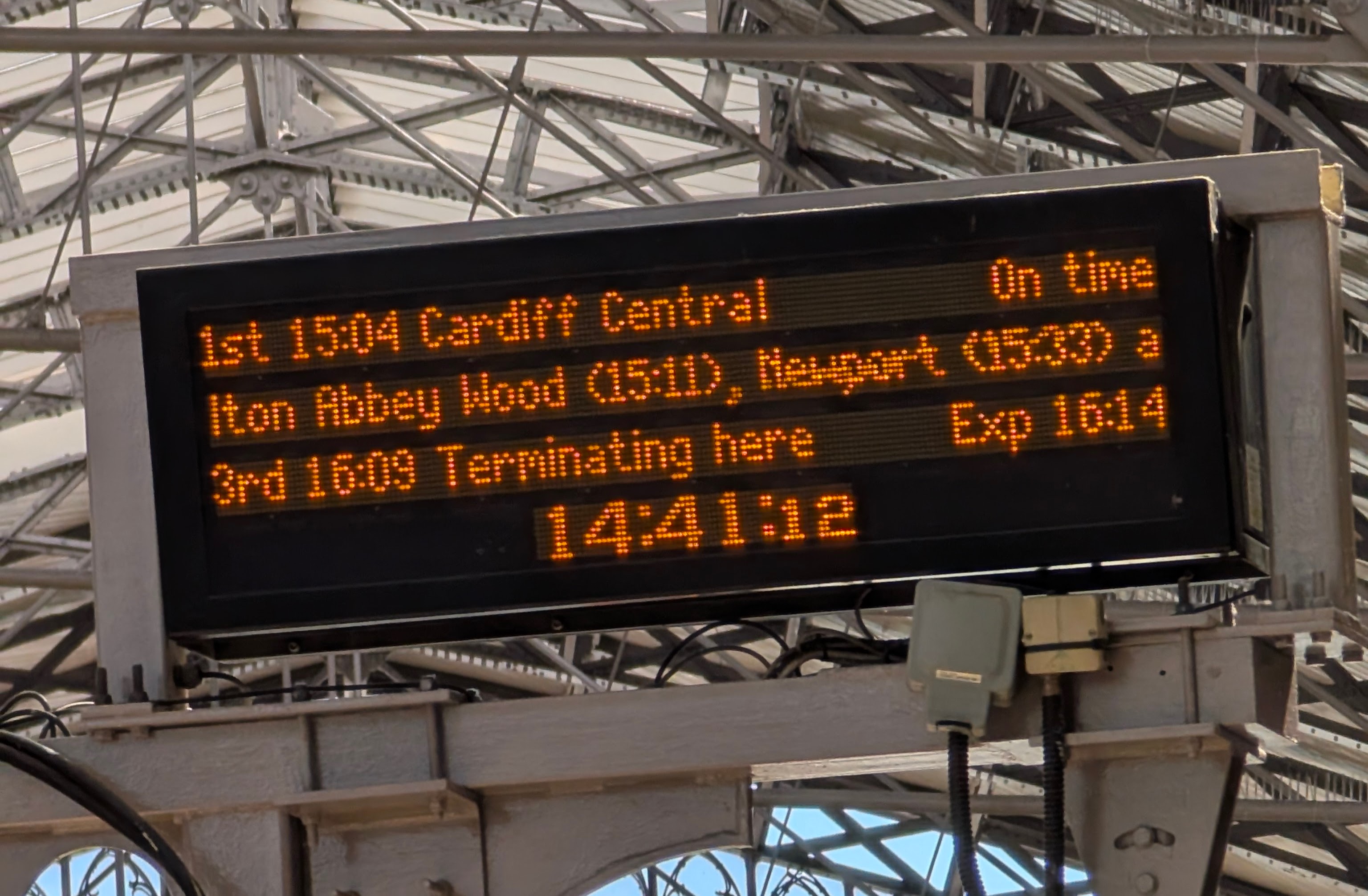
We have all been there. You are standing under the departure boards at London Euston or waiting on a windy platform at Crewe, watching your train slip from 'On time' to delayed by fifteen, thirty, or forty minutes. Your plans are disrupted, and you have paid good money for the journey.
Yet every year, millions of pounds in UK rail compensation go unclaimed. Many passengers assume the claims process is deliberately bureaucratic, or that a 20-minute delay is too small to bother with.
In reality, claiming through Delay Repay is straightforward, usually takes under three minutes once you know how it works, and claws back real money. Here is how the scheme works and how to make sure you get what you are owed.
What is Delay Repay?
Delay Repay is the national compensation scheme used by almost every train operator across England, Scotland, and Wales.
Its biggest advantage over older passenger charter schemes is that it is 'no-quibble'. It does not matter whether your train was held up by a broken train, signal failures, bad weather, or staff shortages. If you arrived at your destination late, you are entitled to compensation. The only standard exception is when timetable changes or engineering works were published well before you bought your ticket.
How much can you claim?
Most UK operators now use Delay Repay 15, meaning compensation kicks in as soon as your arrival is delayed by 15 minutes. A few operators still use Delay Repay 30, where payouts begin at 30 minutes.
Under standard Delay Repay 15 rules, payouts depend on how late you arrive:
- 15 to 29 minutes late: 25% of a single ticket (or 12.5% of a return).
- 30 to 59 minutes late: 50% of a single ticket (or 25% of a return).
- 60 to 119 minutes late: 100% of a single ticket (or 50% of a return).
- 120+ minutes late: 100% of your total ticket cost, single or return.
If you have a return ticket and only one leg was delayed, the percentage applies to half the return fare for delays under two hours. Season ticket holders are also covered, with compensation calculated on a proportional daily rate.
The golden rule: delays are measured at your destination
The single most common mistake passengers make is looking only at the delay of the first train they board.
Under Delay Repay rules, compensation is based on when you arrive at your final destination, not when an intermediate train arrived.
Suppose you travel from York to Bristol Temple Meads, changing at Birmingham New Street. Your initial train into Birmingham is delayed by only 12 minutes. On its own, 12 minutes does not qualify for compensation. But because of that delay, you miss your connection to Bristol, and the next train is an hour later. You eventually arrive in Bristol 65 minutes late.
Because your final arrival was delayed by over an hour, you qualify for a 100% payout for that journey leg. The only condition is that your itinerary allowed the official minimum connection time when booked.
Who do you claim from?
Always submit your claim to the train operating company that caused the delay, not the retailer who sold you the ticket.
If you bought your ticket via an independent app or third-party retailer, do not contact them for Delay Repay. Similarly, if your journey started with Great Western Railway into Reading and then switched to another operator, submit your claim to whichever company caused the initial disruption.
Every train operator has an online Delay Repay form on its website where you can quickly submit your journey details.
The ticket barrier trap
The easiest way to lose out on compensation is losing your proof of travel.
If you travel on orange paper tickets, automatic exit gates at busy stations like London King's Cross, Manchester Piccadilly, or London Paddington will swallow single tickets at your destination. Once that ticket is gone, your proof is gone with it.
Always snap a clear photo of your paper ticket before putting it into the gate, or ask barrier staff to let you through manually. If you travel on an e-ticket, keep a screenshot or save the PDF confirmation showing the ticket number and price.
Ask for cash, not vouchers
When completing your claim, operators often pre-select 'Rail Travel Vouchers' by default. You do not have to accept them.
Under UK consumer law and National Rail conditions, you have the right to receive compensation via your original payment method, bank transfer (BACS), or PayPal. Always select bank transfer or card refund so real money goes back into your bank account.
Submit within 28 days
You have 28 days from the date of travel to lodge your claim. Taking two minutes to snap your ticket and submit the form while the journey details are fresh makes all the difference.
Delays are an annoying reality of UK rail travel, but letting operators keep your money only makes things worse. Keep your ticket, check your final arrival time, and make claiming a regular habit.