DepartUK › Guides › The Most Scenic Train Journeys in the UK
The Most Scenic Train Journeys in the UK
The Most Scenic Train Journeys in the UK
Most of us spend our daily train journeys doing something mundane: checking work emails, keeping an anxious eye on a delayed connection, or wishing the carriage heating was slightly more forgiving. But Britain's railway network was carved through some of the most dramatic terrain in Europe, and a handful of routes turn an everyday train ride into something truly memorable.
You do not need to book an eye-wateringly expensive luxury charter to see them, either. Every route below is served by regular, everyday passenger trains that you can ride with a standard off-peak ticket or a railcard. Grab a cup of tea from the station concourse, secure a window seat, and let the scenery do the hard work.
The West Highland Line: Glasgow to Mallaig
Widely regarded as one of the finest rail journeys on earth, the West Highland Line splits north of Crianlarich, but the northern leg towards Fort William and Mallaig is the headline act.
Departing from Glasgow Queen Street, the train quickly leaves the city behind and skirts the quiet western banks of Loch Lomond before climbing into the vast, treeless expanse of Rannoch Moor. This peatland wilderness has no public roads crossing its interior; the only way through is on foot or by rail. Along the way you will pass Corrour, Britain's highest and most remote mainline station, standing miles from the nearest paved road.
Beyond Fort William, the line curves west beneath Ben Nevis and sweeps across the twenty-one arches of Glenfinnan Viaduct before touching the Atlantic coast near Arisaig. Pulling into Mallaig, with views across the sound to the jagged Cuillin mountains on the Isle of Skye, feels like reaching the edge of the map.
The Settle to Carlisle Line: Through the Yorkshire Dales
Saved from closure by a passionate public campaign in the 1980s, the Settle–Carlisle route remains one of the greatest engineering achievements of the Victorian railway. Running between Leeds (or Settle) and Carlisle, the line cuts straight through the high limestone country of the Yorkshire Dales and the North Pennines.
The undisputed highlight is Ribblehead Viaduct. As the train rumbles across its twenty-four stone arches high above Batty Moss near Ribblehead, the massive bulk of Whernside dominates the western horizon. Further north, the railway climbs through bleak, atmospheric moorland around Dent—the highest railway station in England—and Garsdale, before descending gently into the green pastures and sandstone villages of the Eden Valley towards Appleby and Carlisle.
On a crisp, sunny winter morning or a moody autumn afternoon with mist clinging to the fells, it is an unbeatable journey.
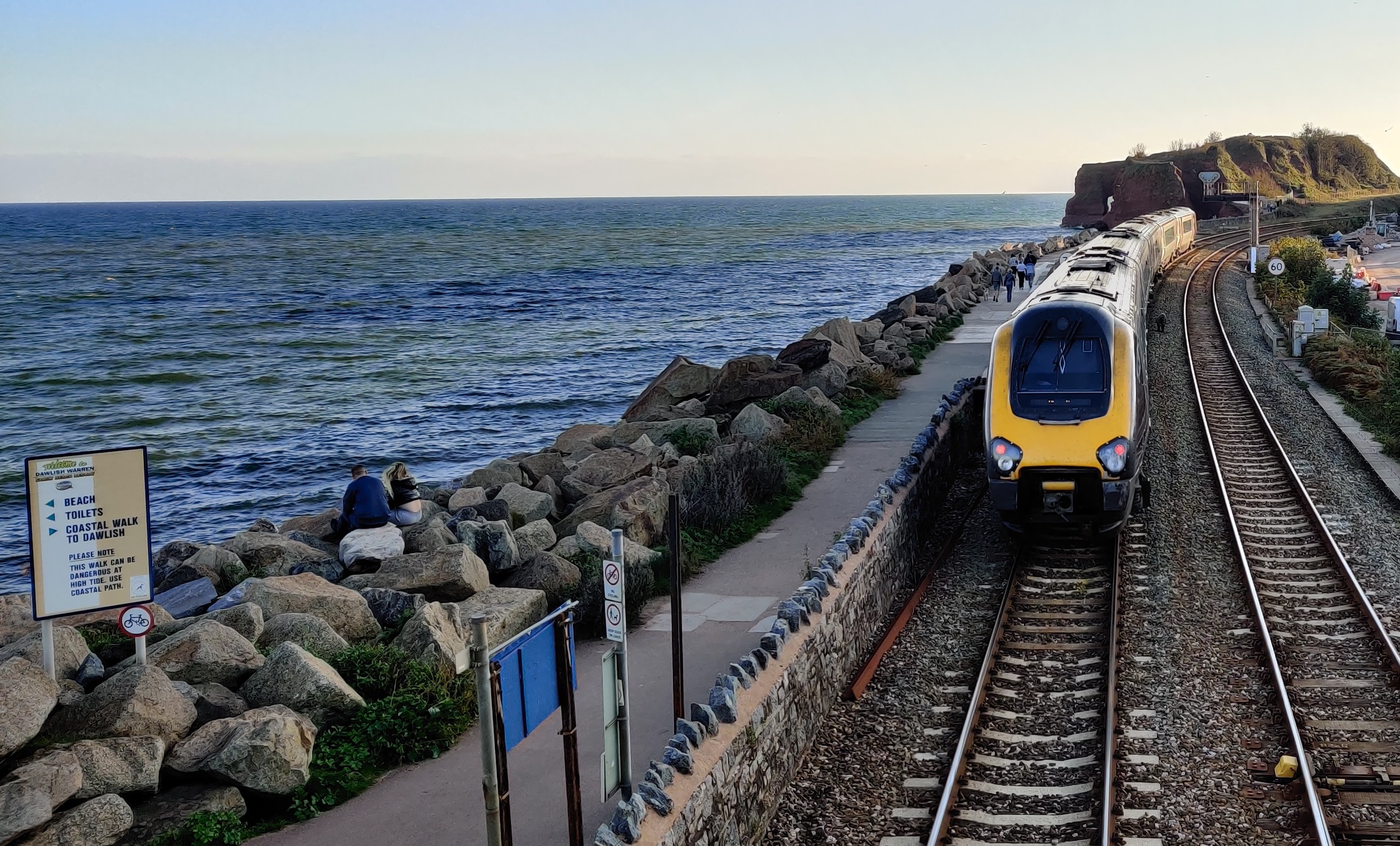
The South Devon Sea Wall: Exeter to Newton Abbot
Not every spectacular train ride requires mountains. One of the country's most exhilarating stretches of railway runs right at sea level along the south coast of Devon.
Leaving Exeter St Davids, trains heading towards Plymouth and Penzance trace the River Exe estuary before emerging suddenly onto the coast at Dawlish. For several miles between Dawlish and Teignmouth, the tracks run directly along the top of Brunel's sea wall. At high tide on a breezy day, salt spray crashes against the train windows, giving you an uninterrupted view across the English Channel with nothing between the tracks and the waves.
It is a relatively brief interlude—ten to fifteen minutes of coastal drama before the line heads inland at Newton Abbot—but it never fails to make the entire carriage look up from their screens.
The Cambrian Coast Line: Machynlleth to Pwllheli
Tucked away along the coast of mid and north Wales, the Cambrian Line from Machynlleth up to Pwllheli is one of the network's most rewarding rides.
The route hugs Cardigan Bay for dozens of miles, but the standout moment comes as the train crosses the Mawddach Estuary into Barmouth. The service slows to a gentle rumble across Barmouth Bridge, a half-mile wooden trestle structure that offers sweeping views across tidal sandbanks towards the peaks of Cadair Idris. Further north, the tracks pass directly beneath the stone battlements of Harlech Castle before rolling across the rugged countryside of the Llŷn Peninsula.
Getting the Most Out of Scenic Train Travel
A little preparation goes a long way when travelling for the views:
- Pick the right side: On coastal routes, knowing which window to aim for makes all the difference. Sit on the left when heading west from Exeter along the Dawlish sea wall, and on the right when travelling north along Cardigan Bay across Barmouth Bridge. On the Settle to Carlisle line heading north, the left side gives the best view of Ribblehead Viaduct and the surrounding peaks.
- Stick to standard passenger trains: While heritage steam tours run along several of these lines, regular scheduled passenger trains run on the exact same rails for standard national rail fares.
- Travel off-peak: Trains are significantly quieter outside peak commuter and holiday hours, making it much easier to swap seats as the scenery changes sides.
- Keep an eye on connections: Remote rural lines usually have less frequent timetables than main intercity routes. Check live departure boards before travelling, especially if your return involves a tight connection at an interchange station.